
SCHOOL IMMERSION
Los Angeles area · Pasadena–Altadena area · PW School
Pasadena–Altadena area, California
Possible arrival gateway: Los Angeles International Airport (LAX)
Waldorf education brings academics, the arts and practical work together for families considering a two-to-five-month school experience.
School overview
Founded in 1979, PW is an independent Waldorf school in Southern California with a full educational pathway from early childhood through Grade 12. Academic study, artistic expression and practical work develop together, with increasing expectations for observation, reasoning, independent judgment and self-management as children grow.
The school places importance on sustained relationships with teachers and peers, alongside self-awareness, responsibility and contribution to the community. For families considering a two-to-five-month visit, the appeal is time to experience a different rhythm of learning. The school’s full age range is not the eligibility range for short visits; grade placement and curriculum fit require individual assessment.
Curriculum
Early-childhood learning uses play, stories, singing, outdoor activity and everyday tasks such as baking, preparing food and age-appropriate handwork. Early literacy grows through spoken language, stories and experiences with letters and sounds, with attention to developmental readiness.
In Grades 1–5, the day begins with Main Lesson blocks lasting two to three weeks. Mathematics progresses through arithmetic, measurement, fractions and geometry; language arts combine reading, writing and stories from different cultures; nature studies include gardening and observing plants and animals. Mandarin and Spanish begin in Grade 1.
Grades 6–8 develop algebra, geometry, history and scientific inquiry, including geology, astronomy, the human body and physical phenomena such as light, sound and electricity. High-school Main Lessons concentrate on a subject for approximately three weeks, alongside academic work through literature, experiments and writing. These describe the school’s curriculum; a visitor’s actual subjects and lesson blocks depend on placement, dates and the timetable.
School highlights
- Focused lesson blocks connect sustained study with observation, discussion and creative work.
- Multisensory teaching explores literature through performance and mathematical ideas through building, movement or baking.
- Continuity of relationships: lower-school class teachers move through grades with their pupils, supported by subject specialists.
- Gradual technology use: early and elementary learning emphasizes real-world experience; older students use technology for STEM, research and creative projects.
- Two-to-five-month visits suit families able to plan continuous attendance; eligible grades, places and participation are confirmed individually.
Arts, music and practical craft
Art and practical craft are part of everyday teaching. Lower- and middle-school studies include painting, modelling in beeswax and clay, sewing, knitting and woodwork. Music involves singing, notation, strings and wind instruments, with band, orchestra and chorus in middle school.
High-school visual arts extend from drawing, painting and sculpture into animation, photography and video; music can develop into improvisation and composition. Class productions in Grade 10 and the senior year bring together performance, props, costumes and teamwork. These are features of the school’s longer-term education, rather than a promise that visitors will join every production, course or complete project.
Physical education and sport
Physical education develops coordination, fitness, cooperation and healthy activity habits through options such as cooperative games, dance and conditioning. Middle-school provision also includes an internal track meet and outdoor sporting encounters with other Waldorf schools.
High-school sports include soccer, basketball, volleyball, pickleball and cross-country running. Teams and competitions follow their own seasons and eligibility rules. Families should separately confirm which PE classes, training sessions or interschool events a visiting student may join; a listed school sport is not an included or guaranteed visit activity.
Student life and after-school arrangements
Daily life emphasizes face-to-face interaction and participation. Stable class groups and small classes help teachers know students over time, while giving children opportunities to practise listening, cooperation and responsibility. Digital tools are introduced gradually without replacing teacher-led learning, physical materials and personal interaction.
High-school clubs include a student-led lunchtime art club, intercultural student activities and after-school ceramics, with offerings dependent on the term.
A separate aftercare service is available for eligible full-day kindergarten and Grades 1–8 students, running until 5:30 p.m. on regular school days. Eligibility, charges and collection arrangements need separate confirmation. Holiday camps are also distinct from term-time attendance; neither aftercare nor holiday provision should be assumed to form part of a visiting-student plan.
Campus and learning environment
The school is in Southern California’s Pasadena–Altadena area. For 2026–27, the school places kindergarten through high school back in Altadena, with preschool at a separate nearby location. Accommodation and daily transport should be planned around the confirmed division and teaching location.
Outdoor observation and practical exploration run through the educational approach, from early experiences in nature to experiments, field learning and projects in later years.
Grades and entry requirements
Suitable for families able to plan at least two months of continuous study. Provide the student’s grade, educational background, English level and preferred dates for programme-fit assessment. Contact an adviser about eligible grades and availability.
Dates and fees
Attendance ranges from two to five months. Contact an adviser about academic dates, curriculum alignment and availability.
- Fees
- Contact an adviser
Accommodation and documents
Accommodation, supervision and transport need separate planning. Prepare the student’s grade, educational and English-language background, and preferred dates; contact an adviser for the specific application checklist.
School learning and activities
The local area
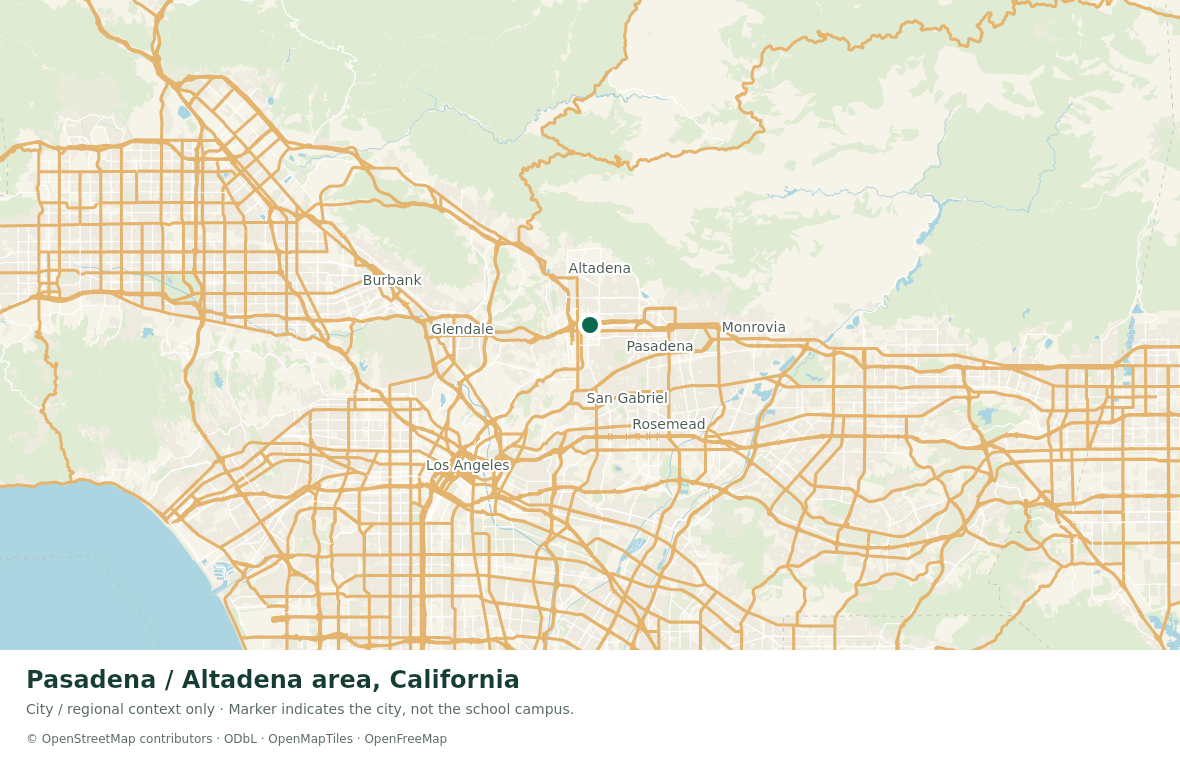
View the regional map
© OpenStreetMap contributors · ODbL · OpenMapTiles · OpenFreeMap
Map copyrightAirports are arrival-planning references, not the school location. Confirm flights, connections and onward school transport separately.
Enquiries
Discuss programme fit, dates and arrangements with an ASCWORLD adviser.
Enquire and apply